How to choose bangs? First look at hair flow, forehead, face and grooming time
Air, curtain or long fringe? Beyond face shape, weigh hair growth direction, natural curl, oiliness and how much time you have each morning.
When choosing bangs, you can’t just apply the face shape formula. The forehead hairline, hair flow direction, natural curls, hair volume, whether it is easy to get oily, and whether it can be blow-dried every day will all affect the condition of bangs after returning home.
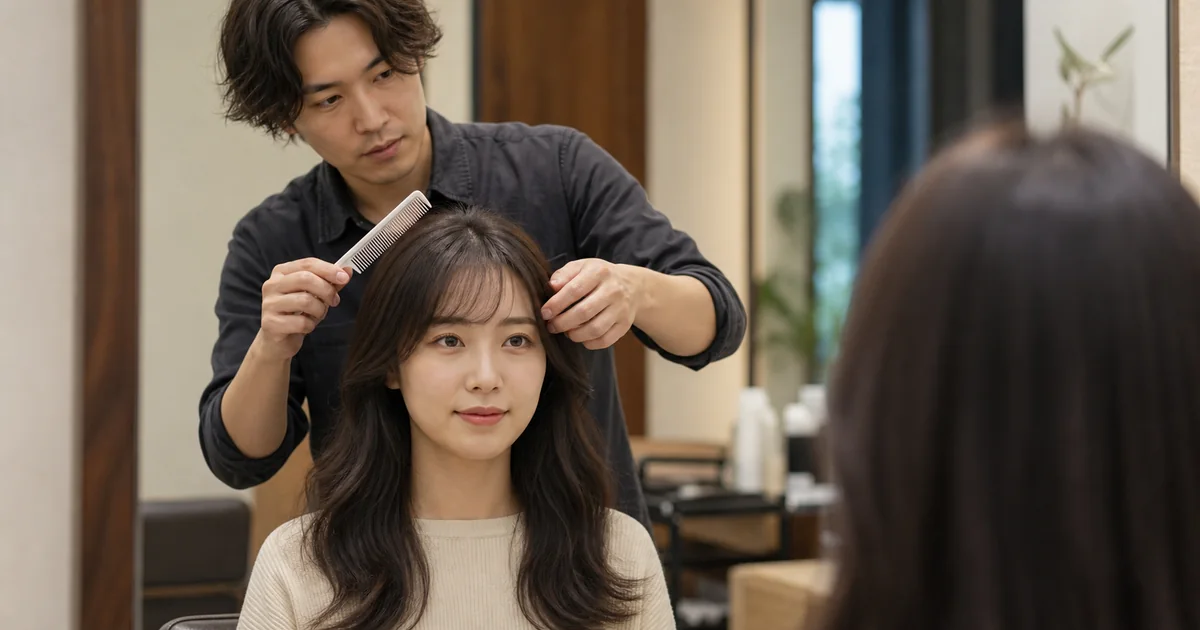
Illustrative scene, not an actual Faye client or a before-and-after comparison. It does not demonstrate a procedure, diagnose hair or scalp conditions, or guarantee results.
Short bangs need to be sorted more stably
The shorter the length, the easier it is for hair flow and natural curls to affect the direction. Blow out your bangs first after washing, and don't wait until the rest of your hair is dry. If you wear a helmet every day or sweat easily, you should also consider deformation and oiliness issues.

Straight-bangs reference, not a real Faye client or a guaranteed cut result. Discuss length and daily styling based on your hair’s growth direction, curl pattern and routine.
Long bangs have higher elasticity
Bangs that are splayed or around the face can usually be connected to the layers on both sides, and it is easier to arrange them to the side when you don’t want to have bangs. However, the length, curvature and dividing lines still need to be adjusted according to the proportions around the eyes, cheekbones and jaw.
Refer to the photo to see the difference in hair condition
Models in photos may be using hair sticks, root perms, or styling products. If you want it to be completed by simply blow-drying after washing, please explain before cutting your hair. Don’t judge the difficulty of finishing just by looking at the finished photo.

Wispy-bangs reference, not a real Faye client. The image cannot establish your hair density or show a styling-free result; confirm your shortest acceptable length and styling time before the cut.
Confirm the shortest position before cutting
You can use your fingers to point out the shortest point you can accept, and indicate whether you need to tie your hair, wear glasses, or keep your bangs pinned while working. For more communication methods, please read How to communicate with designers.
The effect of bangs will be affected by hair flow, humidity and home organization.