Partial Hair Colour: Placement, Proportion and Regrowth
Is partial colour gentler than a full head? How fine highlights and ear tints differ in placement, judging the proportion, whether bleach is needed, and regrowth.
Fine highlights and ear tints are both partial colour: the whole head is left alone and contrast is created only in specific places. What differs is where those places are — and the placement decides the effect, the upkeep, and how easy the regrowth is to live with.
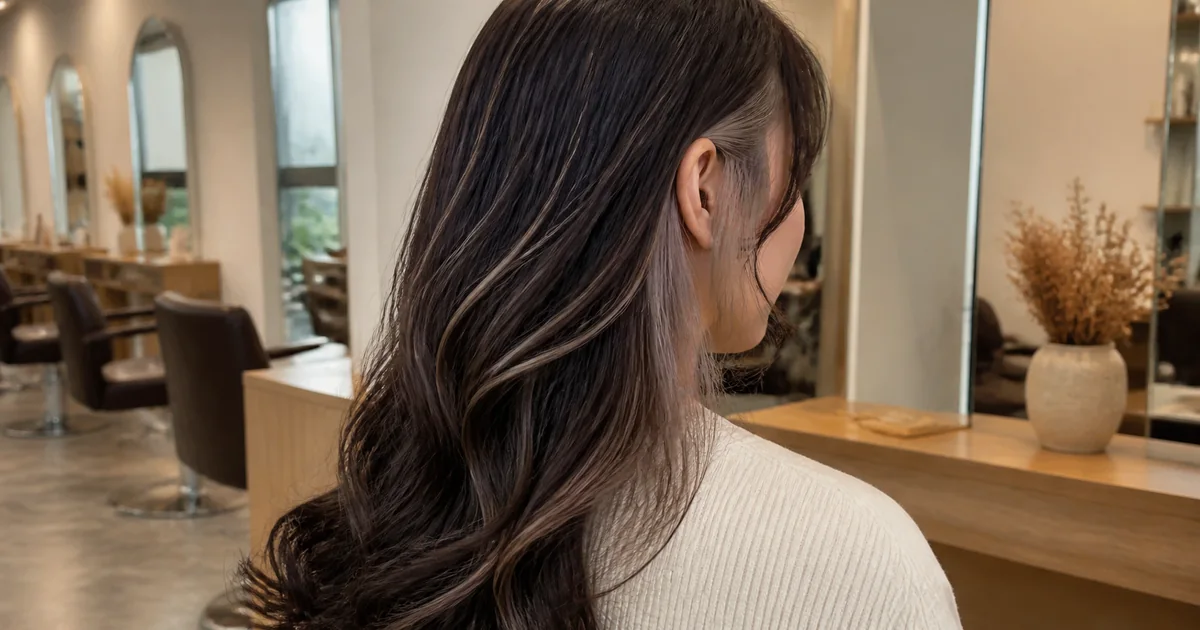
Illustrative scene, not an actual Faye client or a before-and-after comparison. It does not demonstrate a procedure, diagnose hair or scalp conditions, or guarantee results.
How the placement differs
Fine highlights take narrow sections from throughout the head and colour them, scattered through the way the hair falls. Because each section is narrow, they only reveal themselves as you move or push your hair around, so the whole thing reads as depth rather than a block of colour.
An ear tint concentrates the colour in a ring around the ear, in a fixed position. Worn down it is mostly covered; it shows when you tuck your hair behind the ear or tie it up.
So the decision is not which looks better, but when you want the colour to be seen. If your workplace makes anything obvious awkward, an ear tint is easier to control. If you want visible movement day to day, fine highlights suit better.
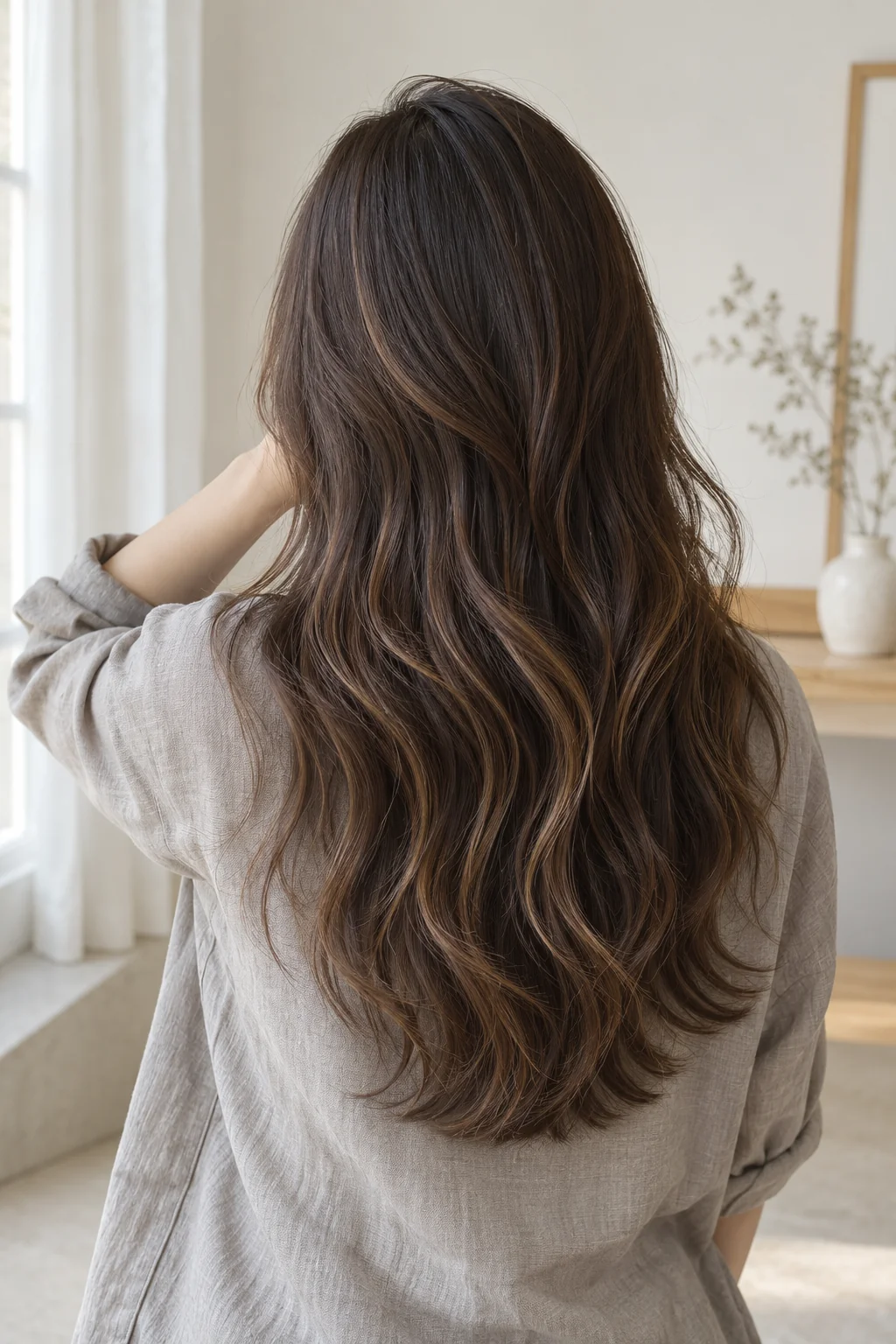
Fine-highlight reference, not a real Faye client or a guaranteed color result. Strand width, color contrast and whether bleach is needed depend on your actual base color and treatment history.
Is partial colour gentler on the hair?
The area is smaller, so the head as a whole receives less chemical processing. That much is true. But the sections that do get processed take exactly what a full head would — if they need lifting, those sections are bleached hair.
So the question is not "it is only a little, so it should be fine", but whether those sections can take it in their current state. If the ends are already dry or breaking, that needs handling first. Start with is dry hair the same as damaged hair.
Does it need bleach?
The reasoning is the same as for a full head: it depends on the target lightness.
Clear light-and-dark contrast, or any cool or fashion shade, usually means lifting those sections first. A brown highlight only slightly lighter than your base may not. For the full assessment, see do I need to bleach my hair to colour it.
Judging the proportion
This is where partial colour most often falls short of expectations, because the proportion you see in a reference photo is affected by the angle, the light, and the styling.
In practice, a few things drive the result:
- The width of each section. Narrow sections read naturally; wide ones give clear contrast but are harder to blend.
- How densely they are distributed. Concentrated around the face, spread evenly, or only on the top layer — each looks entirely different.
- Where they start. Beginning at the root and beginning at the midlengths grow out very differently.
At the consultation, say how obvious you want it to be, and bring a photo you consider too much. That narrows the direction faster than only showing what you like.
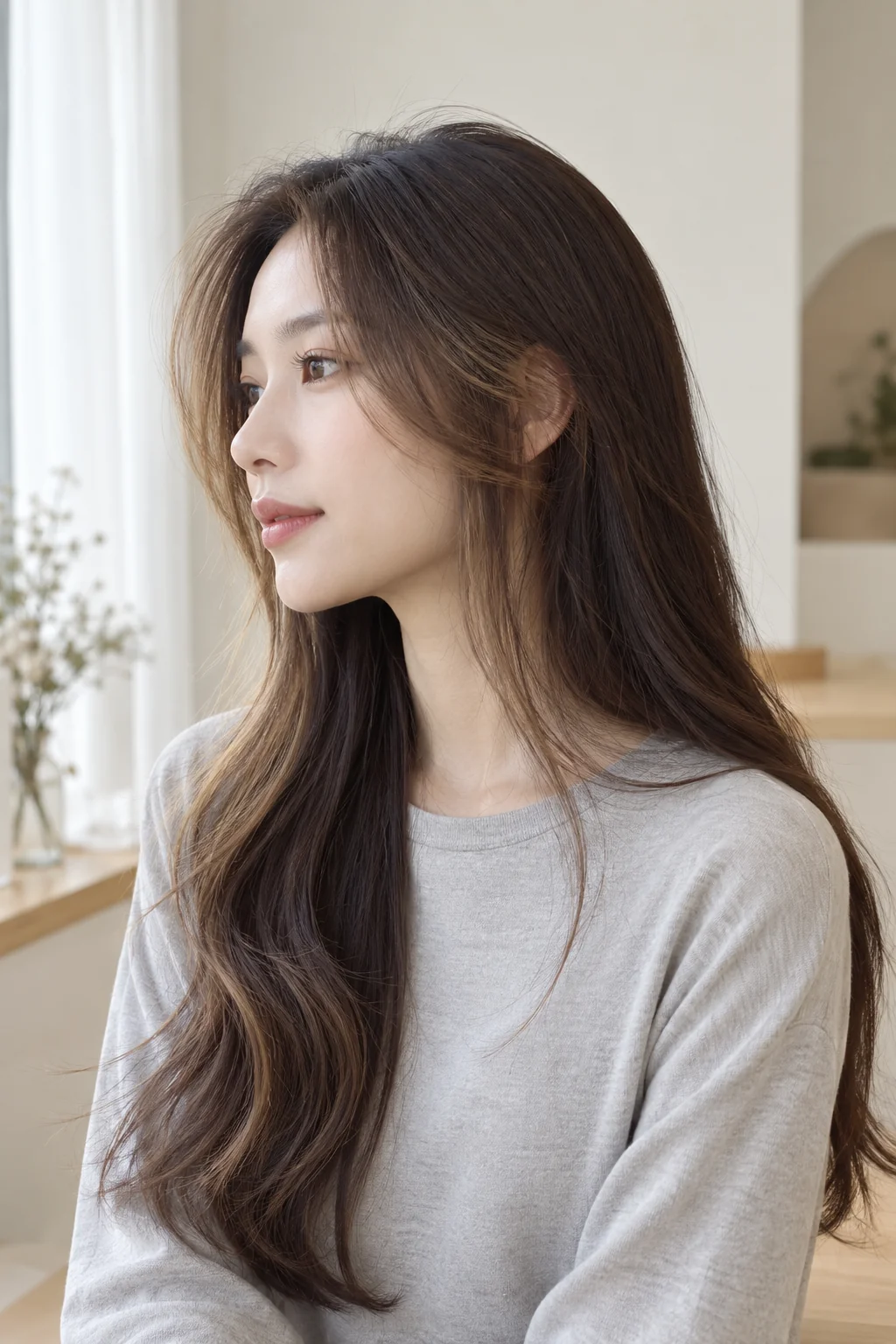
Face-framing color reference, not a real Faye client or a color before-and-after comparison. This placement does not represent an ear-area color design; discuss the actual distribution and when you want the color to show.
What happens as it grows out?
Worth settling before you commit.
Fine highlights are usually easier, because each section is narrow and the line is soft, so the top-up can wait. An ear tint sits in a fixed place, so as the roots grow the line concentrates along one edge and is relatively visible, which makes the top-up rhythm more fixed.
Touching up the roots yourself is not advisable — partial colour has to be re-applied in line with the original placement. For timing, see when to come back after colour or a perm.
Colour care matters as much as it does for a full head
Lifted sections fade faster than the hair around them, so over time the contrast softens, or an unwanted warmth surfaces. Lower water temperature, less aggressive washing, and colour-care products all apply here too. See how to make hair colour last longer.
To talk through the placement and proportion that would suit you, send natural-light photos — one with your hair down and one tucked behind the ear — to Faye on LINE.
The result, the degree of contrast, and how long it holds depend on your natural colour, chemical history, and hair condition, and are confirmed in person.