Can Naturally Curly Hair Be Layered? Curl Pattern, Density and Daily Habits First
Want layers but worried curls will puff out? How curl pattern, volume, length, damage and your blow-dry routine decide the right layering.
Curly hair can absolutely be layered. What actually matters is where the layers start, how much length sits between them, how thick the hair is, and how far the curl springs up once it dries. The right layering adjusts the outline and the weight; layering that ignores where the curl sits can leave one section puffing out.
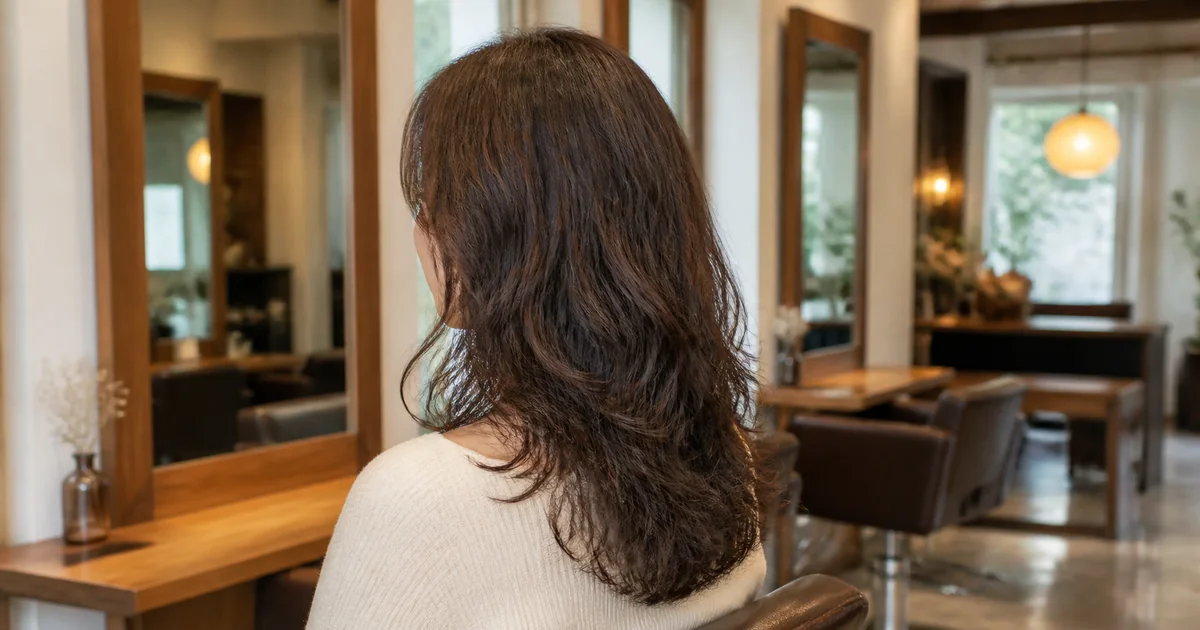
Why curly hair can look shorter than expected after a cut
Length measured wet, or pulled straight, springs up once the hair dries. The stronger the curl the bigger that jump, and on the same head the hair behind the ears and at the back usually springs up more than the hair around the face.
So a cut cannot be judged only by the line while the hair is stretched. In practice a safety margin is left, and the shape is fine-tuned after drying, once you can see where the ends actually land. If you have ever had a cut look right in the salon and then feel noticeably shorter after the first wash at home, this is usually why.
What shapes the layering decision
- Where the curl sits: roots, mid-lengths or ends.
- How thick the hair is, and which areas swell most.
- Whether the ends are bleached, dry or breaking.
- Whether you usually air dry, blow dry, or use a curling wand.
- The shortest length you would accept, and how long you spend on it daily.
The last one gets overlooked most often. The same layering can look very different on someone who blow dries every day versus someone who air dries. If you mostly air dry, you generally need more weight left in to hold the curl down.
Do higher layers always mean lighter hair?
Not necessarily. Layers that are too high or too choppy leave short sections without enough weight, and those are the first to swell when it is humid. No layering at all can leave thick hair with all the weight collected at the ends, reading as a triangle. The goal is a balance between outline, movement and how much work it takes to manage.
A common approach is to place the layers where the remaining weight can still hold them down: enough length around the face to shape the outline, weight kept relatively concentrated through the back, and not too many layers opened up through the mid-lengths where hair swells most.
Thinning and layering are not the same thing
These two get talked about interchangeably, but they affect curly hair very differently.
Layering deals with differences in length. Thinning deals with density. If curly hair is heavily thinned through the mid-lengths with thinning shears, the cut ends stick out from the middle of each section, so it actually reads as frizzier once dry — and it takes a long time to grow back.
When the hair genuinely is too thick, the first moves are usually adjusting the length and where the layers sit. Thinning, if used at all, is kept to the underside of the ends or one specific area rather than spread across the whole head. If you have had a bad experience with thinning before, say so during the consultation.
How to explain what you want
Reference photos help, but so does describing what you dislike most: flat on top, too wide at the sides, ends narrowing into a triangle, or a fringe that lifts. That kind of "not this" information usually narrows the design down faster than "like this" does.
Two more things are worth mentioning up front: the shortest length you would accept, and how long it has been since your last cut. The first sets the safe range; the second helps work out whether the current shape is how it was cut, or how it has grown out.
If you are not sure how strong your curl is, start with the Banqiao natural curl guide. For daily handling of longer hair, see Korean-style smooth long hair for natural curls.
To talk through length and layering, send a photo of your hair air-dried to Faye's LINE.
Results vary with curl pattern, density and how the hair is styled.