Before Your First Hair Colour: Washing, Hair Condition and Talking About Shade
First time colouring and unsure whether to wash first? Hair condition, allergy history, colour and perm records, reference photos and what to wear.
The most important preparation for a first colour is not picking a nice photo — it is making sure your colourist knows the state of your hair and what has already been done to it. The same target shade is approached differently on virgin black hair, faded colour, previously bleached hair, or grey.
Should I wash my hair first?
Keep to your usual routine — there is no need to deliberately go unwashed for days. On the day, avoid scratching the scalp, and skip heavy root-coverage sprays, wax or dry shampoo. If your scalp is red, broken, inflamed or persistently itchy, say so first; the appointment may need to be postponed and medical advice sought.
What to look for in reference photos
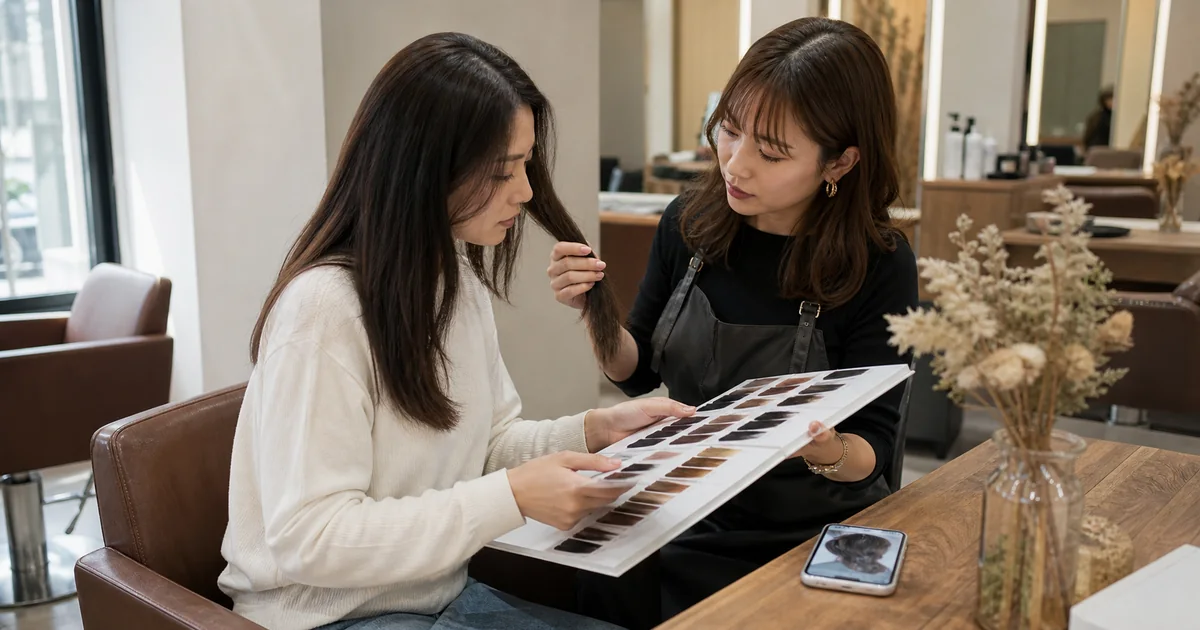
Bring two or three photos of the shade you want, taken in different lighting, and say what you actually like about it — the brightness, the warm or cool tone, or the overall feel. Photos online are affected by filters, lighting and screens, so the shade gets confirmed in person against swatches and your own hair.
As well as the colour you want, bring one you do not want. That often narrows things down faster — two people asking for brown can mean completely different things, one avoiding any red, the other avoiding anything dark, and the photos they like will not necessarily show that.
Things that must be mentioned
- Any bleaching, highlights, black dye, or colour-depositing shampoo.
- Any box dye, root touch-up kits or henna used at home.
- Recent perms, straightening or other chemical services.
- Any noticeable irritation or suspected allergic reaction from past colouring.
Leaving out colour or perm history increases the risk of uneven results and damage. If you cannot remember exact dates, a rough answer plus photos still helps.
Black dye and henna deserve a specific mention. The pigment they leave behind is difficult to cover or remove with ordinary colour, so going lighter afterwards usually takes extra steps and extra time. Knowing in advance means the realistic path can be explained from the start.
Can I get to my target shade in one visit?
Not always, and this is where first-time expectations most often come apart.
To reach a bright or ashy shade from virgin black hair, the hair usually has to be lifted to a certain level before the tone shows at all. Hair that has been dyed dark also needs the existing pigment dealt with first. Whether all of that can happen in one sitting depends on how much your hair can take.
The common approach is to work in stages: go as far as the condition allows, then move closer to the target after a gap. It is slower, but more realistic than pushing all the way in one visit and paying for it in damage. For more on whether bleaching is needed, see do you need to bleach before colouring.
How soon does colour start to fade?
Colour is not permanent. Pigment starts washing out from the first shampoo, and cool tones — ash, smoky, green-based — usually go first, while warm tones hold on longer.
So the colour you see in week one is not the colour you will have two months later. It is worth asking during the consultation what this shade fades towards. If you would not be happy with the faded version, that is a reason to rethink the target.
Practical preparation
Dark clothing, or a top without a high neckline, makes the appointment easier. Leave enough time, and avoid scheduling something tight straight afterwards. Colour appointments run longer with more length, more density, or existing colour to work around, so confirm the likely duration when booking.
To check what is feasible beforehand, see how to photograph your hair before colouring or perming. For first-visit preparation generally, see your first appointment with Faye. Once you are ready, get in touch through Faye's LINE.
Colour results depend on your natural shade, colour and perm history and hair condition; the actual outcome follows an in-person assessment.